Travel Updates |
|
Lao Language
|
|
Lao (phaasaa laao) is the official language of Laos. It is a tonal language of the Tai family, and is so closely related to the Isan language of the northeast region of Thailand that the two are often classed as one language. The writing system of Lao is an abugida (a writing system composed of signs denoting consonants with an inherent following vowel) and is closely related to the writing system used in Thai.
|
|
|
|
|
|
Laos Society and Conduct
|
|
Ethnic Lao culture is closely entwined with Buddhism, but the country’s ethnic diversity produces a corresponding cultural diversity. Painting is not a highly developed art form, but music, dance, weaving, and embroidery are.
|
|
|
|
|
|
Laos Population and People
|
|
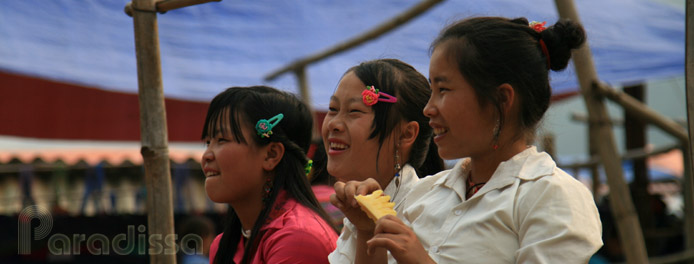
Lao PDR has a population of 4,474,000 inhabitants (projected 1993) comprising over 47 different ethnic groups, such as Hmong, Khmer, Yao, A'kha, Ikoh, Lu etc. Each tribe has its own distinctive customs, dialects and costumes.
|
|
|
|
|
|
Laos Economy
|
|
Laos is a rural country whose relatively low population density has allowed the continuation of a village society reliant on subsistence agriculture. The lack of a national government infrastructure and effective transportation networks has also contributed to the relative independence and autonomy of most villages. Residence in a village thus has been an important aspect of social identity, particularly for lowland Lao ethnic groups.
|
|
|
|
|
|
Laos State and Law
|
|
AS A TRADITIONAL SOCIETY until 1975, Laos was a conservative monarchy, dominated by a small number of powerful families. In 1975 it was transformed into a communist oligarchy, but its social makeup remained much the same. In the 600-year-old monarchy, the Lao king ruled from Louangphrabang (Luang Prabang), while in other regions there were families with royal pretensions rooted in the royal histories of Champasak (Bassac), Vientiane (Viangchan)
|
|
|
|
|
|
|
|
|
Back to top |
|
|