|
VIETNAM MAJOR ATTRACTIONS
Vietnam
with its diversity in geographical terrain, in climatic areas,
in cultural heritage can offer you the most colorful holidays.

Vietnam covers an area of 330,992 thousand sq km. Three-quarters
of the country consists of mountains and hills of which the highest
is 3143-meter Hoang Lien mountain, and the longest is the Truong
Son range which runs almost the full length of the country. The
country’s coastline is 3200 km having many beautiful beaches along.
So either you look for an easy relaxing holiday enjoying natural
wonders, or a great adventure of life, Vietnam has it all!
Vietnam’s
diversity in culture originates from its more than 4000 years
of history, from its various ethic groups of the population each
with its own civilization and from the influence of neighboring
countries. With more than 1000 years of Chinese occupation, Vietnam
is strongly influenced by this 5000 year-old culture. The legacy
left in Vietnam is found in pagodas and temples, customs, cuisines,
and especially the Vietnamese strong sense of resistance against
foreign invasion and the protective sense of the local culture.
The Cham civilization, which blossomed in the central region of
the country from the 2nd to the 15th century, has left many beautiful
Hindu-styled temples, some of which have been recognized as the
world heritage sites by the UNESCO. Also when traveling across
the country you will probably encounter numerous hill tribe people
from different ethnic minorities of the 54 groups in Vietnam,
each dressed in their traditional attires and each living isolatedly
from the mainstream society. It is their unique cultures that
have made the Vietnamese cultures so colorful. So if you look
for some special cultural experiences, Vietnam is surely the place!
Top
NORTH
Hanoi
is the capital city of Vietnam.
The city architecture is the blend of Vietnamese, Chinese and
French. The city is known to the locals as three main areas: The
Ancient Citadel Area (11th centurey); The Old Quarter
(Ancient Business Area) dated back from the 11th century;
The Frech Quarter-French architure dated back from the 19th
century. You can join in the hustle and bustle of the 36 streets
in the Old-quarter or enjoy the tranquility of the city in many
evergreen parks, lakes around. Nice places to visit include:
- HoChiMinh
Mausoleum: dedicated to the most revered man of the country;
- The
Presidential Palace and Ho Chi Minh’s Houses: Perfect architecture,
nice park and interesting history;
- One-pillar
pagoda (dated back to 1049): One of the symbols of Hanoi, dedidicated
to the Goddess of Mercy;
- The
ancient Temple of Literature or The First University of Vietnam
(dated back to 11th century), the symbol of the Vietnamese learning
tradition;
- Tran
Quoc Pagoda, Quan Thanh temple and the West Lake: Independence
tradition of Vietnam, nice setting, floating cafe on the
biggest lake of Hanoi; sipping coffee or cold beer catching
sunset is recommended;
- Lake of the Restored Sword: Nice setting, surprising Vietnamese culture
and the wish for peace;
- Hanoi
Famed Old Quarter with many markets;
- Hanoi Opera House: Frech style architecture;
- Water
Puppet Performance: unique art in the world, surely should not
be missed;
- History Museum: The history of Vietnam;
- Army Museum: History of the country and of the coutry’s army.
- Ethnology Museum: The peoples of Vietnam, having amazing collections
of the Vietnamese traditional houses;
- Fine Arts Museum: surprising traditional fine arts of Vietnam
along the nation’s history;
- Ho
Chi Minh Museum: Ho Chi Minh’s life and Vietnamese history;
- Airforce Museum: Vietnamese airforce and aircraft displays;
- Women Museum: Vietnamese women achievements including collections
of traditional women costumes and modern fashion designs;
- Ho
Chi Minh Trails Museum: the legendary Ho Chi Minh trails;
- Hoa Lo Prison Museum: used
to be called “Hanoi Hilton”
Top
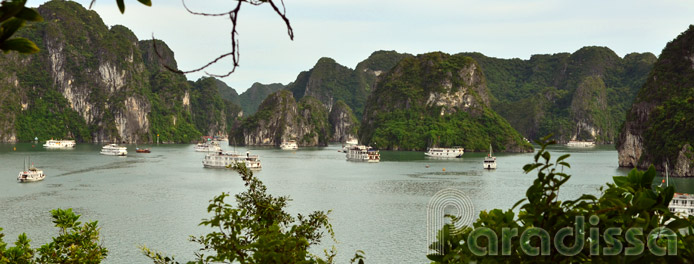
Halong
Bay is
180 km (3 hour drive) north-east
of Hanoi. Having 3000 greenlimestone
islands rising from the crystalline emerald water in the Gulf
of Tonkin, having tens of beautiful caves above and under water
and the diverse eco-system, Halong Bay has been recognized as
the World Heritage by the UNESCO (United Nations Educational,
Scientific and Cultural Organization). Halong Bay can be visited
on a 1-day, 2-day or 3-day trips from Hanoi. The visitor can stay
at many international standard hotels in Halong city or on luxurious
traditional junk in the wild of the Bay.

CatBa
island
is in the Gulf of Tonkin, 5
hour boat cruise from Halong city. Nice places to see in CatBa
are the national park, tranquil white-sand beaches, nice walk
on the waterfront sipping cold beer, sharing joy with the locals.
Catba Island can be accessed by boat from Halong Bay or from Haiphong
harbor city.
HoaLu-TamCoc-BichDong
is 130 km (2 hour drive) south
of Hanoi. HoaLu was the capital of Vietnam in the 10th century.
TamCoc is nicknamed “Halong inland” with beautiful limestone mountains
jutting out of the paddy fields. The 2-hour bamboo rowing-boat
trip takes you through the rice paddies enclosed by mountains,
through three under water caves. BichDong is a Buddhist triple-roofed
pagoda built into limestone cliffs and caves of a rocky mountain.
A day trip from Hanoi to this area is definitely recommended.
Perfume Pagodas
is 60 km (2 hour drive) south-west of Hanoi. This area is
the destination for Vietnamese Buddhist Pilgrims during Buddhist
festival time. The highlights of this trip include the rowing
boat trip on a river with beautiful scenery around and the beautifully
designed pagodas built into mountain cliffs which can be
visited by hiking or by cable car.
Top
MaiChau
is 150 km (4 hour drive) south-west
of Hanoi. This area is home to the Tai, H’Mong, Kinh, Dzao people.
The highlights of this trip include the trekking in the wild with
breathtaking scenery, staying with a Thai family in a house on
stilts, sharing the traditional dance with the Thai people.
Sapa
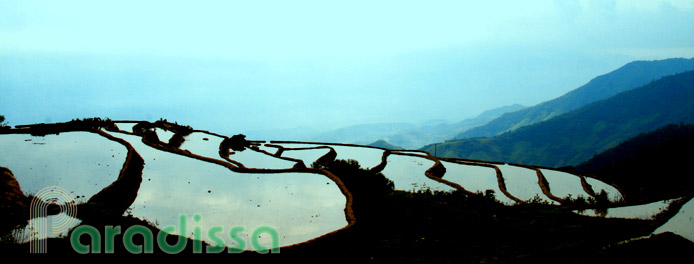
is 400 km (9 hour drive by car) north-west of Hanoi. This cloud-covered town
is located at 1550 m above
the sea level, cool all year round. There are many magnificent
mountains including the peak of Indochina.

The area is home to 7 ethnic groups with unique cultures, lifestyles
and languages; all wearing their traditional attires, working
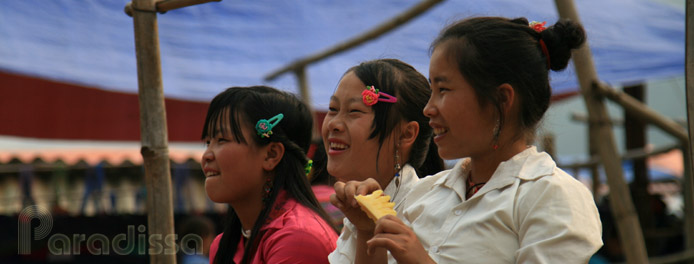
on evergreen terraces. Hill tribes gather for the weekend market
for trade and for meeting with lovers. Sapa is a good place
for relaxing, for culturally touring, and for trekking and should
not be missed on your trip.
Sapa can be accessed by road
or by train (to Laocai) from Hanoi. Activities include sighseeing,
discovering the hill tribes’ culture, mountain climbing, and trekking
with home stay.

North-West, Nort-East:
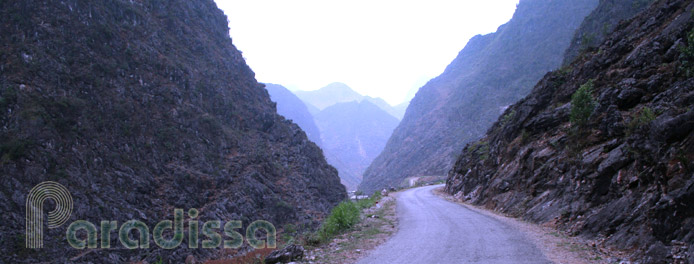
This area is excellent for adventurous
travelers with the evergreen scenery, high mountains, and deep
valley. It is home to more than 20 ethic groups relatively isolated
from the mainstream society. Highlights of this trip includes
the Sapa love market (where boys and girls from the local
ethnic groups look for lovers), the scenic drive flanked by forests
of blossoms in January and February, DienBienPhu -the French military
base where the French lost the war to the VietMinh, the colorful
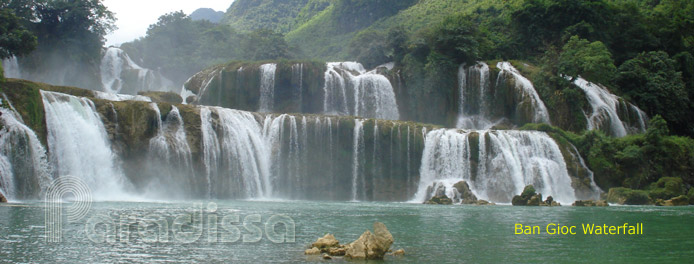
hill tribe market in BacHa and the magnifient BanGioc Waterfall.
Top
THE CENTRAL REGION

Hue
is 689 km( 1 hour flight,
12 hours by train from Hanoi, 1 hour flight from Saigon) south
of Hanoi, was the capital of Vietnam in 19th century, controversially
considered the most beautiful city in Vietnam. Highlights include
the ancient citadel; a cruise on the Perfume River to visit the
royal tombs of MinhMang, TuDuc, Khaidinh; the Thanh Toan
Roofed-Bridge and the matchless Vietnamese traditional cuisines.
Hue should not be missed on your trip.
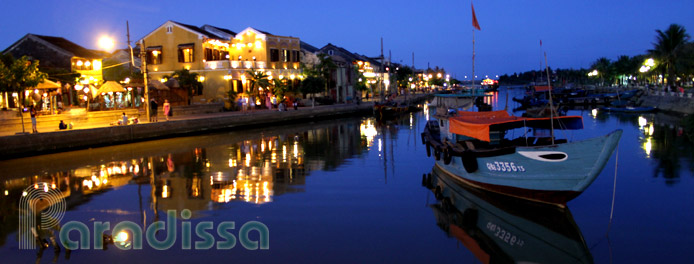
HoiAn
is a riverside town 138 km (4
hour drive from Hue) south of Hue, was once a major
international port trading in silk, ceramics, and spices. Hoian
has the blend of Vietnamese, Chinese and Japanese culture which
has been retained in parts of HoiAn architecture. If you look
for some cultural discovery, or for fine silk clothings, or just
simply some easy time hanging around the beach, then HoiAn is
the place! HoiAn is a World Heritage site and has always been
one of our tourists’ highlights.
MySon
is 65 km south-west of HoiAn.
This site was once the Holy Land of the Cham people whose civilization
was strongly influenced by the Indian culture. The legacy is the
many Hindu-like temples. MySon is a World Heritage Site and can
be visited in half a day from Hoian or Danang.

The
Central Highland
is
renowned for the temperate
climate. This area is home to many ethnic groups with very distinct
cultures. Dalat (elevation 1475 m) is situated in a pine forest-covered
region dotted with lakes, waterfalls, beautiful flowers and vegetable
gardens. Dalat is a four-seasons-in-a-day city and a romantic
honeymoon spot, the destination for Vietnamese artists. Dalat
should not be missed on your trip. Dalat is 205 km (5 hour drive)
north-west of NhaTrang and 320 km( 7 hour drive, 30 minute flight
from Saigon) north of HoChiMinh city.
Top
NhaTrang
is 450 km north of HoChiMinhcity
(1 hour flight from Saigon). With white sand beaches, turquoise
almost transparent water and superb corals, NhaTrang is certainly
excellent for relaxing, snorkeling and scuba diving. NhaTrang
should not be missed on your trip.

PhanThiet
is a sleepy fishing town 200
km (4 hour drive) north-east of HoChiMinh city. The region is
beautiful with many sand dunes and white sand beaches, crystal
clear water. PhanThiet is good for anyone who likes to relax and
easy holidays. Accommodation is quite good with some European-managed
resorts and hotels. The area is considered to be the driest one
in all of Vietnam.

Muine:
20
km from Phan Thiet, the Mui Ne Bay has more than 16 km of pristine
white sand beaches. Driving from PhanThiet to Mui Ne, you'll have
a chance to savor the most exotic scene of the region with the
famous Red Sand Dunes one side and the white sand beaches with
coconut trees on the other. Passing by this region, you also can
visit one of the oldest Cham towers in Vietnam.
Top
SOUTH
HoChiMinh
City (Saigon)
is the always-in-rush-hour city. In here one would easily find something to
entertain himself whether he wants to discover museums, pagodas,
markets or just sipping coffee in a sidewalk café, chatting with
his fellow travelers, listening to thumping music. Nice places
include
- The
Reunification Palace with information about the situation in
Vietnam during the War;
- War Remnants Museum: used to be called the War Crimes Museum
- The
Notre Dame Cathedral;
- The
General Post Office;
- The
Municipal Theater used to be the Parliament Building;
-
GiacLam Pagoda;
-
The Jade Emperor Pagoda;
- Thien Hau Pagoda, Binh Tay
Market and China Town
Top
CuChi
is
65 km (1.5 hour drive) north of HoChiMinh city. The tunnel network
of CuChi became legendary in the war for facilitating the Vietcong
to gain victory over the American troops. At its height,
this three-leveled tunnel stretched over 250 km. Coming to CuChi,
one would have a chance of checking how underground life of the
locals was in the war.
TayNinh
serves as the headquarters of
one of Vietnam most interesting indigenous religion. The CaoDai
Great Temple at the sect’s Holy See is as extraordinary as
the sect’s philosophy whose patron saints include Victor Hugo,
Winston Churchill, and Goddess of Mercy.
Mekong
Delta
is the southernmost region of
Vietnam, the “rice basket of the country” .
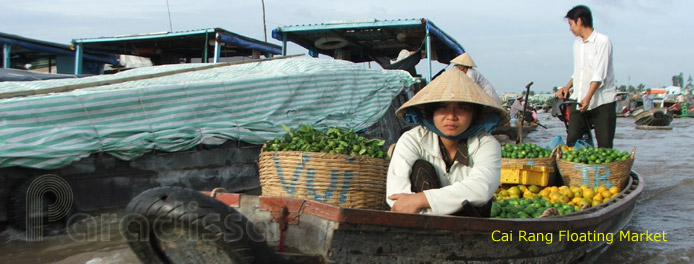
The region is intersected by a vast network of canals which also
make lifestyle in here so different, life on water. Daily activities
mostly take place on water. Check out the colorful floating markets
or just enjoy the tasty fruits in an orchard are the highlights
of the trip to the Mekong Delta. Cantho is the capital city of
the region.
Top
|