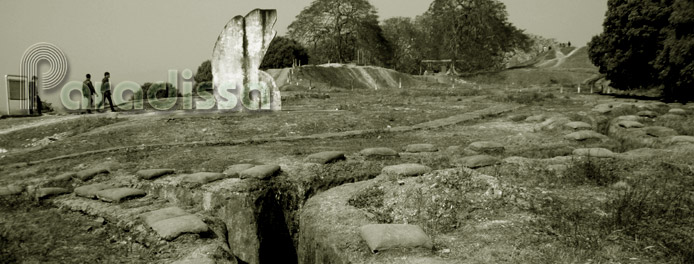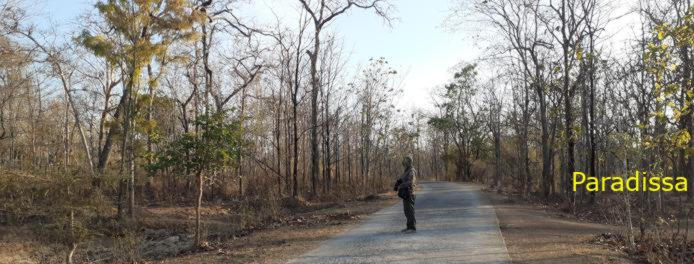


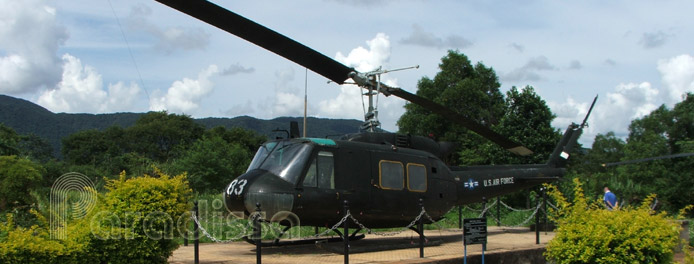
The Mc Namara Line was a barrier line 5-7km south of the Ben Hai River running all the way from the sea at Gio Linh (in the east) to the Laotian Border to the west with the total length of 100km. This was an antipersonnel barrier implemented by the US in South Vietnam during the Second Indochina War (Vietnam War).
Another component of the infiltration barrier was an antivehicular barrier, mostly an aerial operation to interdict traffic on the Ho Chi Minh Trail.
The purpose of the barrier line was to prevent personel infiltration, and supply of men and war materials from North Vietnam to South Vietnam during the war.
Historical Events Leading to the McNamara Line
Infiltration barriers were known as early as the Great Wall of China. In Vietnam, similar walls were found at Hoang Son (Deo Ngang, Ngang Pass, natural mountains) and Truong Luy (man-made walls) in the 17th century.
During the First Indochina War, the French Expeditionary Troops under De Lattre as the Commander-in-chief also implemented a De Lattre's Line with 1,200 bunkders stretching all the way from the coast in the Northeast of northern Vietnam to the south of the Red River Delta. This line proved later to facilitate the defeat of the French in Vietnam and Indochina.
But the concept of the McNamara Line was mostly based on technology to detect traffic and infiltrations, and to interdict mostly by aerial operations, and by on-site bombs, mines, bomblets, fire from strong points... Ideas of such a barrier line had been proposed to the US military leaders from the early phase of the war in Vietnam but were not implemented and were not paid much attention to since there was no such urgent need.
In the earlier phase of the war, the US mostly sent military advisors to train South Vietnam troops and supported South Vietnam with all war materials. By mid 1964, South Vietnam was to face difficulties and a possible defeat. And with the Tonkin Gulf Incident in August 1964, the US got involved further by starting to bomb North Vietnam. The whole plan was to stop the supply of men and materials from the North to the South.
By early 1965, US military leaders had found out that all military operations including bombing of North Vietnam did not bring good results and South Vietnam was facing an "impending collapse": requirements for a dramatic change of policy. And this led to the deployment of US combat troops to South Vietnam from March 1965.
By mid 1966, the US found out that increase in military operations on the ground and in the air was not effective. Direct confrontations between North Vietnam's troops (PAVN) and US combat troops were found more frequent in all over South Vietnam. The flow traffic of men and materials from North to South Vietnam was not effectively hindered. Advice from the military to the US President was to step up much further aerial operations as well as ground operations and that ground invasion of Cambodia, Laos and even North Vietnam was necessary to stop the supply from the North into South Vietnam.
US Secretary of Defence McNamara contemplated that such a widening of the war on the ground would only result in widening the current difficulties for the US and South Vietnam troops. And a proposal for a high-tech infiltration was seriously considered. And in April 1966, McNamara turned the proposal to the Jason Group, an advisory group composed of 45 top scientists of the US, to study the possible effectiveness and implementation.
From June 1966, the Jason Group started working on the details of the implementation of the barrier line after a meeting with US military and the White House.
On 30-August-1966, the details of the implementation of the barrier line was submitted to McNamara as a proposal for further study, but McNamara accepted it for implementation.
Construction of the McNamara Line in Vietnam
The task for construction the McNamara Line in Vietnam was assigned to the Marine Units of the 3rd Marine Division and the Navy Seabees. The construction was started in the summer of 1967 and was planned to be completed in two phases:
- Phase 1 planned for completion in November 1967: Clearing the ground (600-1000m side), building strong points, installing barrier devices...
- Phase 2 planned for completion in July 1968: Buidling of strong points to the west and installing barrier system.
The barrier line from the sea stretching on the coastal strip to the west (for less than 30km) was meant to be comprehensive as per plan and the part of the line extending further westward to the Laotian border was meant to be less comprehensive.
In contrast to McNamara and the Jasons, the US Marines of the 3rd MarDiv were not eager in the plan at all and they had to do the construction work under artillery from across the river and by snipers. This combined with busy and brutal military confrontations in South Vietnam between the PAVN and the US troops throughout 1967 into 1968 might have explained that the McNamara Line in Vietnam was never completed as planned.
Paradissa arrange Vietnam War Tour and Vietnam battlefield tours guided by knowledgeable tour guides.